Home›Ingredients

CardioCharge Ingredients: Complete Formula Breakdown

CardioCharge combines seven ingredients in a pomegranate drink powder, and each one has a distinct job. This page gives the supplement facts, the amount of every active ingredient, what it does and why it was chosen. For the quick version, see the CardioCharge homepage.

Introduction

Reading the CardioCharge Label

Supplement labels reward patient reading. CardioCharge’s label groups its ingredients into four families: three electrolytes, an energy-pathway sugar molecule, two botanical extracts and an amino acid. Understanding the families makes the amounts easy to interpret.

The official page places the formula in the context of a daily routine, and the review page shows how customers talk about it. Here we stay with the ingredients themselves.

Supplement Facts

CardioCharge Supplement Facts Summary

Supplement Facts

Servings per container: 20 · Net wt. 4.11 oz (116.4 g)

D-Ribose3,000 mg
L-Glycine1,000 mg
Hibiscus Flower Extract (4:1)470 mg
Potassium (as Potassium Citrate)380 mg
Magnesium Glycinate190 mg
Sodium (as Sodium Citrate)140 mg
Hytolive® Olive Extract30 mg
Active Ingredients

Every CardioCharge Active Ingredient Explained

Amounts, roles and reasons for each of the seven ingredients. Prefer short summaries? The homepage ingredient section has them.

D-Ribose in the CardioCharge formula

D-Ribose

3,000 mg · Cellular Energy

D-Ribose is a simple sugar that the body makes on its own and also meets in small amounts through food. Its best-known job is structural: it forms part of adenosine triphosphate, usually shortened to ATP, the molecule cells spend whenever they need to move, contract, or build something.

Because ATP is used continuously, nutrition researchers have long been curious about the raw materials behind it. D-Ribose is one of those raw materials, and the CardioCharge label lists 3,000 mg of it per serving, making it the largest ingredient in the formula by weight.

Within this formula it is the energy anchor. The minerals handle fluid balance, the plant extracts add botanical compounds, and D-Ribose speaks to the cellular energy side of the wellness picture. The finished product is described as a sugar-free drink mix, and the Supplement Facts panel on the jar carries the full nutrition details.

Good to know: People who manage blood sugar or take glucose-lowering medication should ask a healthcare professional before adding D-Ribose.

See the full D-Ribose profile, learn how the formula works together, or browse published D-ribose research on PubMed.

Hibiscus Flower Extract (4:1) in the CardioCharge formula

Hibiscus Flower Extract (4:1)

470 mg · Plant Extracts

Hibiscus sabdariffa is a tropical flowering plant. Its fleshy red calyces are brewed into teas and drinks across many regions, and its extracts contain anthocyanins and other polyphenols, the pigments responsible for the deep crimson color.

CardioCharge lists a 4:1 hibiscus flower extract at 470 mg per serving. A 4:1 designation generally means that roughly four units of plant material were used to produce one unit of extract, so the ingredient is a concentrated form rather than ground flower.

Hibiscus has attracted academic attention in studies that measured blood pressure, and that is the reason it appears in many heart-wellness formulas. It is important to keep the claim in proportion: research on an ingredient does not prove that a finished drink powder can treat, prevent, or cure cardiovascular conditions, and CardioCharge is presented only as everyday nutritional support.

Good to know: People taking blood pressure medication or diuretics should speak with their healthcare professional before using hibiscus-containing products.

Read the complete hibiscus profile, see it in action under CardioCharge benefits, or explore hibiscus studies on PubMed.

Hytolive® Olive Extract in the CardioCharge formula

Hytolive® Olive Extract

30 mg · Plant Extracts

Hytolive® is the trade name of an olive fruit extract standardized to contain naturally occurring olive polyphenols. Hydroxytyrosol is the compound most often associated with it, and it is studied for its antioxidant behavior.

The CardioCharge label lists 30 mg per serving. That is the smallest quantity of any ingredient in the formula, which is typical for concentrated, standardized botanical extracts where a small weight carries a defined amount of active plant compounds.

Its job in the blend is complementary. While hibiscus contributes red-flower polyphenols, Hytolive contributes olive-derived ones, so the formula draws on two different plant sources for antioxidant nutrition.

Good to know: Anyone with olive allergies, or who takes anticoagulants or blood pressure medicines, should check with a healthcare professional first.

Open the Hytolive profile, compare it with the formula overview on the official page, or search hydroxytyrosol research on PubMed.

Potassium (as Potassium Citrate) in the CardioCharge formula

Potassium (as Potassium Citrate)

380 mg · Electrolytes

Potassium is one of the three electrolytes in CardioCharge. Inside the body it is concentrated within cells and works with sodium on the outside to keep the electrical gradients across cell membranes in working order, a gradient that underpins nerve signals and muscle contractions, the heart muscle included.

The label lists 380 mg of potassium per serving, supplied as potassium citrate. Citrate forms are commonly chosen for powders because they dissolve readily in water.

Many adults do not reach the daily potassium intake suggested in national nutrition guidance, which is one reason electrolyte formulas include it. Still, the amount in a single serving is modest and is meant to complement a diet that includes potassium-rich fruits, vegetables, and legumes.

Good to know: People with kidney conditions, or those on potassium-sparing medicines, ACE inhibitors, or potassium restrictions, should talk to a healthcare professional before using potassium-containing supplements.

View the potassium details, see how it fits everyday heart wellness habits, or read the NIH fact sheet on potassium.

Magnesium Glycinate in the CardioCharge formula

Magnesium Glycinate

190 mg · Electrolytes

Magnesium acts as a helper for more than three hundred enzyme systems. It is involved in turning food into energy, in muscle relaxation after contraction, and in the movement of other electrolytes across cell membranes.

CardioCharge uses magnesium glycinate at 190 mg per serving. In this form the mineral is attached to glycine, an amino acid, and the pairing is a popular choice among supplement formulators.

Because magnesium is a co-factor for ATP, it sits naturally next to D-Ribose in this formula: one supplies a raw material for the energy molecule, and the other helps the machinery that uses it. That relationship is one of the reasons the ingredient set reads as a coherent combination rather than a random list.

Good to know: Magnesium intake from supplements can affect digestion in some people, and it may interact with certain medicines. Ask a healthcare professional if you take prescription drugs.

Visit the magnesium profile, see its place in the full ingredient explainer, or review the NIH fact sheet on magnesium.

Sodium (as Sodium Citrate) in the CardioCharge formula

Sodium (as Sodium Citrate)

140 mg · Electrolytes

Sodium is vital to life, yet most dietary conversations focus on getting less of it. The reality is that the body needs a certain amount to regulate fluids, send nerve signals, and contract muscles; the issue for most adults is total intake from processed foods rather than a lack of it.

CardioCharge lists 140 mg of sodium per serving, supplied as sodium citrate. That figure is a small fraction of the amounts that public-health bodies describe as daily upper limits for the general population.

It is the third piece of the electrolyte set. With potassium and magnesium, sodium forms the balance that lets a powdered drink behave like a hydration formula rather than simple flavored water.

Good to know: People on sodium-restricted diets should count this serving toward their total daily intake and ask their healthcare professional about suitability.

Check the sodium details, find out how electrolytes work in the formula, or read the American Heart Association sodium overview.

L-Glycine in the CardioCharge formula

L-Glycine

1,000 mg · Amino Acid

Glycine is the simplest of the amino acids, yet it shows up in many places in the body: in collagen and other proteins, in the pathways that build glutathione, and in several signaling roles. The body can make glycine itself, and it also arrives through protein-rich foods.

The CardioCharge label lists 1,000 mg of L-Glycine per serving, which makes it the second-largest ingredient by weight after D-Ribose. Having an amino acid in the formula is what separates it from a pure electrolyte mix and gives it a broader nutritional profile.

Its function here is supportive. It is not described as a heart-specific ingredient; it contributes amino acid nutrition to the overall composition, which also includes the glycine already attached to the magnesium.

Good to know: Those who are pregnant, nursing, or taking prescription medicines should check with a healthcare professional before using amino acid supplements.

Go to the L-Glycine profile, read the customer review page, or look at glycine research on PubMed.

Formula Synergy

How the CardioCharge Ingredients Work Together

The ingredient list reads as a set of linked ideas. Magnesium is a helper for ATP, and D-Ribose is a raw material for ATP, so the energy section supports itself. Potassium, magnesium and sodium cover the three main electrolyte jobs, so the water you drink is more than flavored liquid. Hibiscus and olive supply different plant polyphenols, and glycine, both on its own and bound to magnesium, adds amino acid nutrition.

That coherence is the reason to look at the formula as a whole instead of ingredient by ingredient. Our article on how CardioCharge works follows the same pathway, and the benefits article turns it into practical terms.

Other Details

Other Ingredients, Serving Information and Formula Summary

Other Ingredients

CardioCharge is pomegranate flavored. The complete list of other ingredients appears in the Supplement Facts panel on your jar, as it does for any supplement.

Serving Information

Each jar holds 20 servings and weighs 4.11 oz (116.4 g). Prepare a serving with water exactly as the label directs, and do not exceed the recommended serving.

Formula Summary

Seven active ingredients, three electrolytes, no caffeine and no sugar. Compare packages in the homepage pricing or see the official overview.

Questions

CardioCharge Ingredients – Frequently Asked Questions

How many active ingredients are in CardioCharge?
Seven: D-Ribose, Hibiscus Flower Extract (4:1), Hytolive® Olive Extract, Potassium Citrate, Magnesium Glycinate, Sodium Citrate and L-Glycine.
Which ingredient is present in the largest amount?
D-Ribose at 3,000 mg per serving, followed by L-Glycine at 1,000 mg and Hibiscus Flower Extract at 470 mg.
Is there caffeine in CardioCharge?
No. The formula is described as caffeine-free with no stimulant ingredients; the energy approach is explained in our how-it-works article.
Who should be careful with these ingredients?
People with kidney conditions, potassium or sodium restrictions, blood pressure concerns or prescription medicines should ask a healthcare professional before using CardioCharge.
Where can I see the formula in context?
The official page formula overview groups the ingredients by job, and the homepage ingredient section shows them with images.
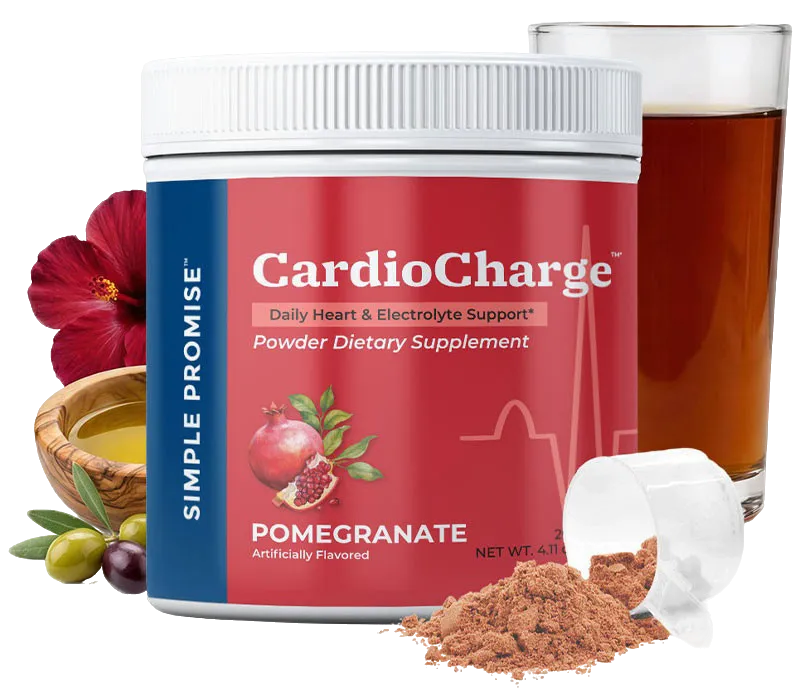
CardioCharge jar with hibiscus and olive ingredients

Like What You See in the CardioCharge Formula?

All seven ingredients, all amounts disclosed, no caffeine and no sugar. Choose a package, or revisit the customer reviews first.

Free shipping · 365-day money-back guarantee · Secure checkout